Museums and Galleries
At Clifton, we want every child to feel that museums are places for them. A visit with school may be a child's first opportunity to experience a museum, explore its collections and discover everything these spaces have to offer. By introducing children to museums during their primary years, we aim to build their confidence and curiosity so that visiting museums can become something they continue to enjoy throughout their lives.
Our Museum Learning experiences are about much more than a day out. Children learn how to observe closely, ask questions, investigate objects and artefacts, make connections with what they already know and develop new ideas. Museum collections provide opportunities for children to encounter real objects and evidence, think critically and see their learning in a different context.
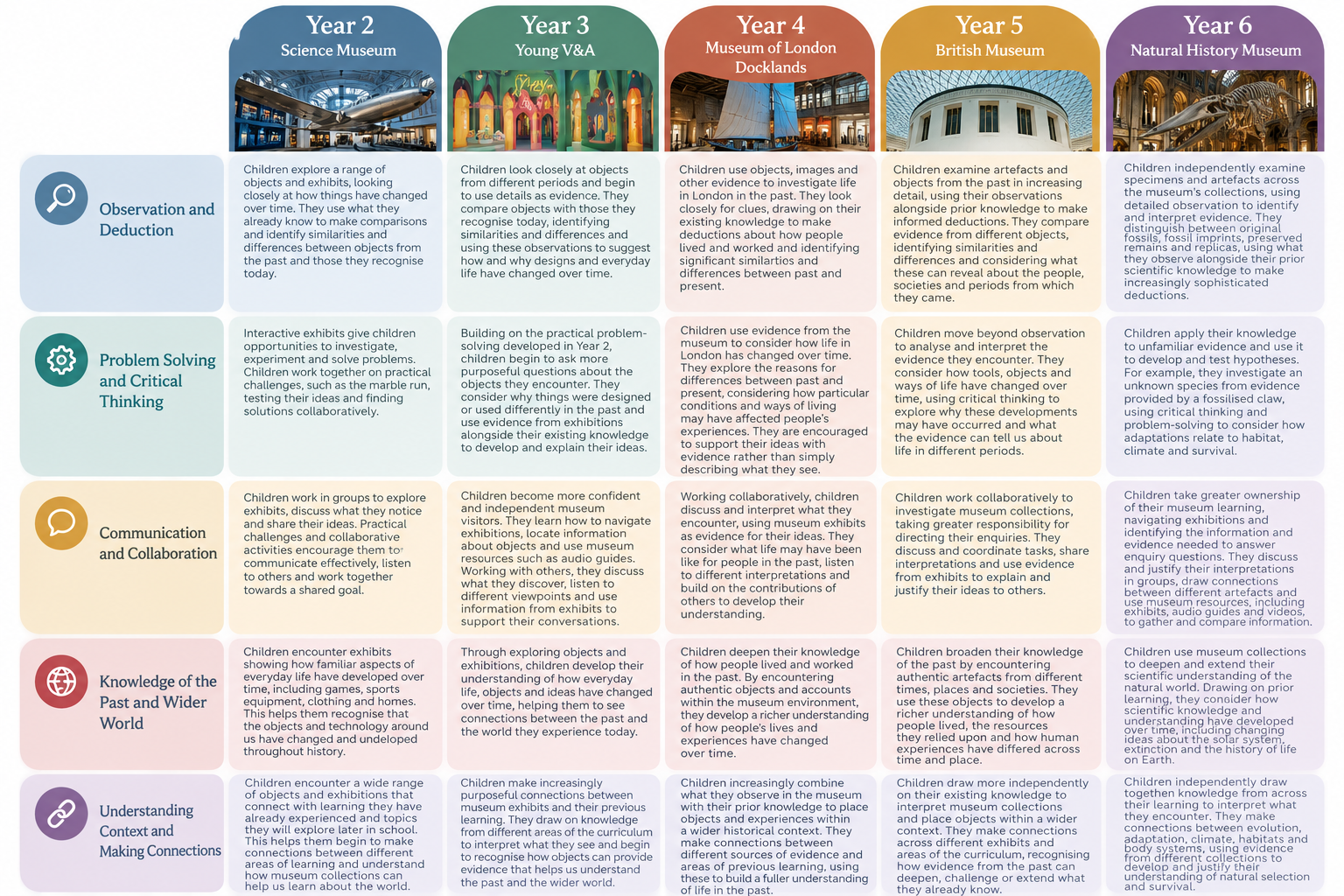
Across their time at Clifton, children visit a range of museums and collections, with experiences carefully chosen to develop curiosity, observation and deduction, problem-solving, critical thinking, communication and knowledge of the wider world.
Our aim is simple: to open doors to experiences children may not otherwise have and inspire a lifelong interest in learning, discovery and the world around them.
In their review of research investigating the ‘User value of museums and galleries’, Scott et al. (2014) describe how users engage with museums through evaluating, questioning, reflecting, comparing, focusing and discovering. These encounters were found to lead to enhanced wellbeing through positive feelings, an improved sense of self and making connections with others, the past, the place, local community and national identity.
What We Want the Children to Gain
Through our Museum Learning experiences, we encourage exploration, discovery and curiosity. We want children to become confident museum visitors while developing skills and knowledge that support learning across the curriculum and beyond.
Our experiences are designed to develop:
- Observation and deduction – looking closely, noticing details and using evidence to draw conclusions.
- Problem-solving and critical thinking – asking questions, investigating and considering different possibilities.
- Communication – discussing ideas, listening to others and confidently sharing observations and opinions.
- Knowledge of the past and the wider world – encountering people, places, objects and ideas beyond children's everyday experiences.
- Making connections – drawing on existing knowledge, understanding context and making links between different areas of learning.
Together, these experiences help us foster the curiosity, confidence and lifelong love of learning that we want every Clifton child to develop.